
Metabolism
On this page
Understanding Calorie Deficit
Wayfit Editorial·
The rule is everywhere in weight loss advice: cut 3,500 calories and lose one pound of fat. It's simple, it's memorable, and it's partly right. Understanding where it holds and where it breaks down makes it more useful, not less.
Where the number comes from
Fat tissue contains roughly 3,500 calories per pound. So in pure energy terms, if you run a 3,500-calorie deficit over time, you should lose approximately one pound of fat. A 500-calorie-per-day deficit, maintained over a week, equals 3,500 calories. Hence the common advice: cut 500 calories a day, lose one pound a week.
The physics are sound. The biology gets more complicated.
Why actual results differ from the math
When you eat less over time, your body adapts. Metabolic rate tends to decrease, not dramatically all at once, but meaningfully over weeks and months. This is called metabolic adaptation, and it's one reason weight loss typically slows down after the first few weeks even if you keep eating the same amount.
Some of the weight lost is also water and lean mass, not just fat. The proportion depends on how large the deficit is, how much protein you're eating, and whether you're doing any resistance training. Losing lean mass is worth avoiding because muscle is metabolically active tissue that supports your resting calorie burn.
None of this means the rule is useless. It means you should expect early results to be faster than later results and plan for that rather than assuming something has gone wrong.
Choosing a deficit size that works in practice
A deficit of 300 to 500 calories per day is generally manageable for most people and produces weight loss at a rate that preserves more muscle mass. Something in the range of 0.5 to 1 pound per week.
Larger deficits can produce faster initial results, but they also tend to increase hunger, decrease energy, and raise the risk of losing muscle along with fat. The body responds to aggressive restriction by making it harder to sustain. Many people who try rapid restriction end up eating more to compensate, negating the intended deficit.
Smaller deficits are slower but more sustainable. For most people, consistency over months matters more than the specific size of any given week's deficit.
Using the estimate as a starting point
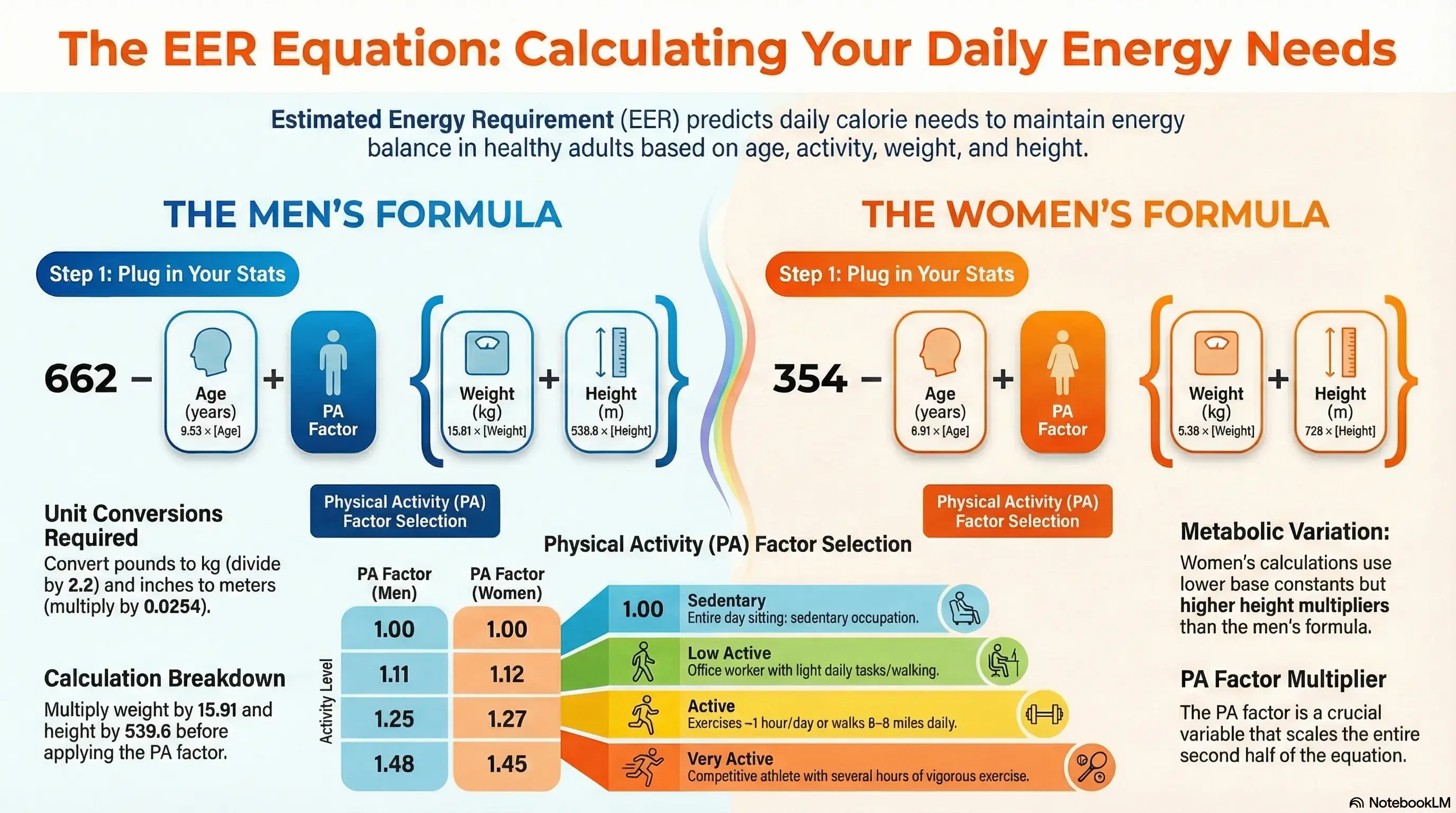
A calorie calculator can give you a rough estimate of how many calories you need to maintain your current weight. From there, subtracting 300 to 500 calories gives you a starting deficit range. The actual outcome depends on how accurate the estimate is for your particular metabolism, which varies.
Track what you're eating and what your weight does over two to four weeks. If you're losing weight at a reasonable rate, keep going. If nothing's moving, reduce intake by another 100 to 200 calories. If you're losing faster than feels healthy or sustainable, eat a little more.
The math gives you a starting point. Your results tell you what's actually happening.
Related articles
- Calorie Cycling: Does Varying Your Intake Help? — A strategy for breaking through plateaus.
- How Calorie Calculators Work — Understanding the estimates behind your target.
- What BMI Misses — Why weight alone doesn't tell the full story.
- Why Poor Sleep Makes You Hungrier — How sleep affects the hormones controlling appetite.
This page is for education only and is not medical advice. If you have a medical condition or specific concerns, talk with a qualified healthcare professional.